

By The Kit Room Team on 3rd Jul 2026
When you're shooting in tight, demanding documentary spaces - a moving car, a crowded protest, a confined interior - you face a familiar dilemma. The GoPro Hero fits in anywhere and costs almost nothing. The cinema-grade camera delivers image quality you can cut into anything. But neither quite solves the real problem: how do you shoot something genuinely difficult with genuinely high-grade results?
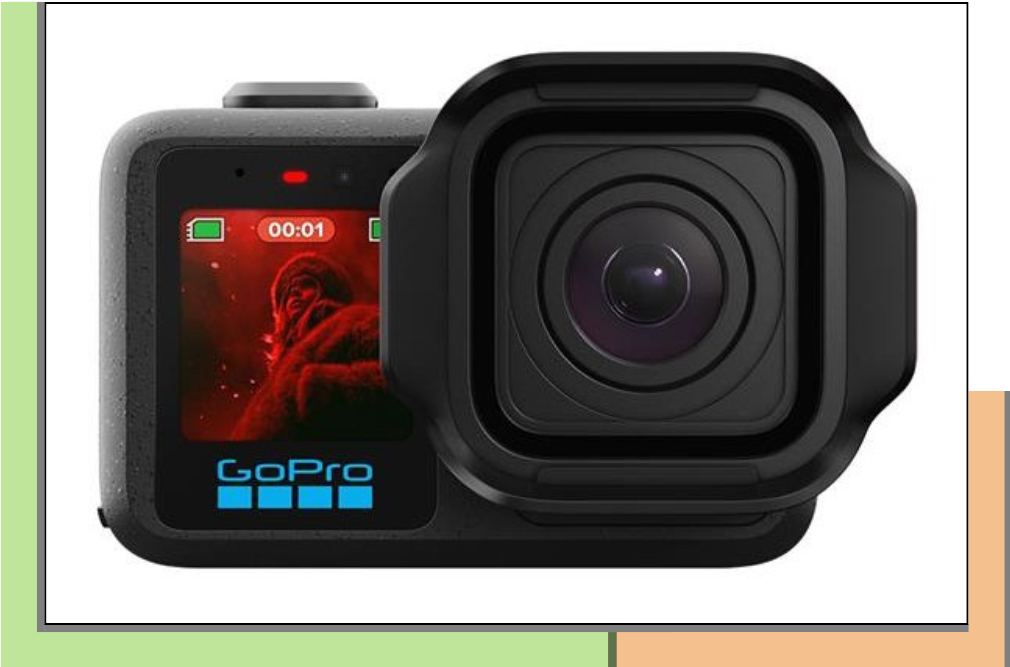
Enter the GoPro Mission 1 Pro, the new action-cinema camera. Made to bridge the gap, it’s designed with both quality and freedom in mind. But whether this positioning actually holds up in practice for documentary filmmakers depends on what you’re shooting.
Credit: GoPro (21 May 2026). Welcome to a New Generation of GoPro | MISSION 1 Series
What it offers
On paper, its specs are impressive, surpassing those of the Hero line. Its 50MP 1” sensor and GP3 processor support up to 10-bit 8k resolutions with a 14-stop dynamic range, enabling the Mission to excel in dynamic, low-light, high-contrast situations. It even has a specialised Low Light Mode (up to 4K60) for those especially tricky shots, aimed at boosting brightness and cutting noise, as well as in-camera HyperSmooth and AI AF technology, designed for clear, stable shots in spontaneous, rugged moments.
Where it then separates itself from cinema cameras is in its ergonomics. Even compact bodies like the FX3 or C70 become difficult to rig in unusual, confined spaces. As the size, weight and power consumption grow, so do the extra logistical and safety considerations, as well as the dedicated time and resources. At 207g, the Mission 1 Pro is built for quick, discreet and secure rigging. It carries versatile digital focal lengths, as well as a 32-bit float audio with four onboard mics, that overcome limited access issues. A longer battery life and mobile monitoring app make it easier to shoot remotely too.
The case for pursuing
- Image quality closer to cinema than to action-cam. The sensor size, bit depth and dynamic range are a genuine step up, invaluable for matching footage to A-cam shots.
- Goes where cinema cameras can't. Size and weight make a real difference in unpredictable situations, cutting down crew and rigging time.
- Audio is built in, not bolted on. 32-bit float recording and four mics reduce the need for a separate sound setup in situations where adding one just isn't practical.
- Low light performance is addressed. This has historically been the weak point of small sensor action cameras, and the dedicated Low Light Mode is aimed squarely at it.
The case for pausing
- It's still a fixed, digital lens. The digital lenses offer flexibility within limits, not the optical control of a cinema lens.*
- Sensor size is smaller than most cinema cameras. Still inferior to Super 35 and full-frame sensors, depth of field, low-light ceiling and dynamic range aren't equivalent.
- Monitoring is action-cam by design. A companion app is convenient on the move, but it's not a substitute for an on-camera monitor, especially for focus and exposure.
A worthy investment
For documentary filmmakers who regularly need to get a camera into spaces a cinema rig can’t with quality emulating A-cam work, the Mission 1 Pro closes a real gap. It won't replace a cinema camera for controlled setups, nor will it replace a Hero for genuinely disposable, high-risk shots. But for the specific problem of tight, unpredictable spaces where quality still needs to hold up, it's an excellent middle ground.
The decision comes down to how often these specific scenarios come up on your shoots, and whether the image quality gain is worth the additional cost and workflow considerations.
If it is, check at our own Mission 1 Pro kit, which includes additional grip options, and reach out to our team for your own package today.