
By The Kit Room Team on 21st Jul 2026
When most of us enter the industry, consumer lenses like Canon and Sony are the most obvious choice. Built to serve stills and videography work first, they're affordable and versatile. But as you progress, you'll inevitably hear about cine lenses and their uniquely configured mechanics. It can be easy to assume that this design will instantly elevate your work. Whilst it certainly can help, it won't be the images that are enhanced, it will be the workflow. The question is: are these improvements actually suitable for your way of working?
Cine lenses, like our Atlas Mercurys and Angénieux EZ1 and EZ2, are built around consistency. Geared, manual iris, manual focus and zoom rings work seamlessly with lens motors, giving you precise control over every adjustment. Swapping focal lengths is straightforward too. Follow focus, matte box and other accessories stay where they are, whilst constant T-stops and parfocal zooms help maintain exposure and focus. It's a smoother way of working, particularly when you're repeating shots or making frequent lens changes. The trade-off, of course, is cost. Cine lenses are designed for bigger productions, and they're priced accordingly.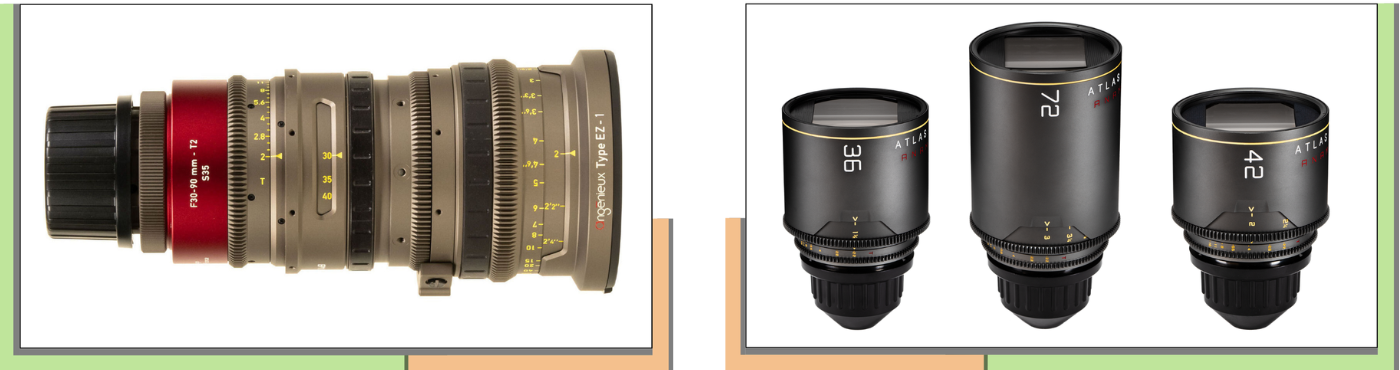
Meanwhile, consumer-oriented lenses, like our Canon EFs and Sony G Masters, are built for flexibility. They're generally smaller, lighter and easier to carry, making them well suited to shoots constantly on the move. Manual control is there when you need it, but autofocus can take care of exposure and focus as a scene develops. The compromises are therefore mostly practical. Lens size and controls vary from one model to the next, so accessories often need adjusting between swaps. Variable F-stops and non-parfocal zooms also mean you'll want to keep a closer eye on exposure and focus as you work.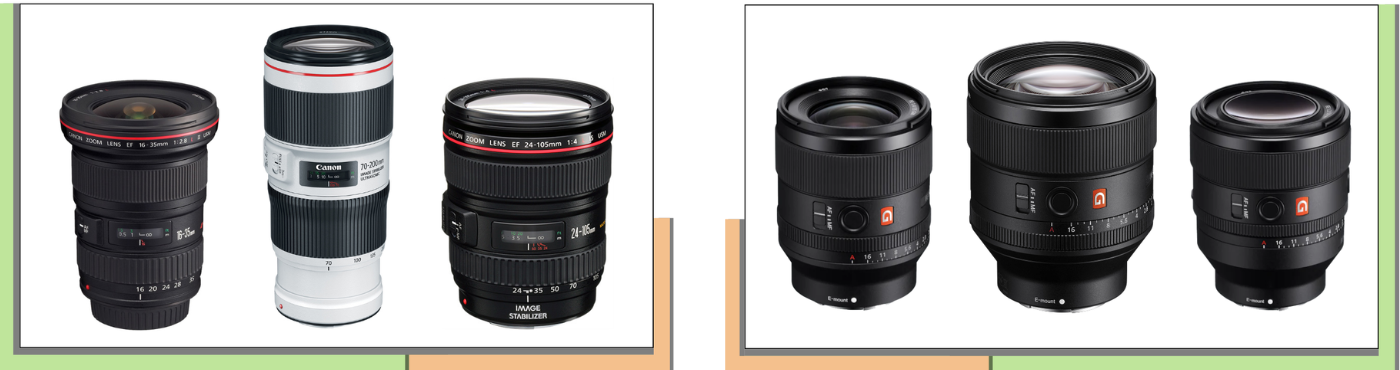
The best choice usually comes down to the pace of the production rather than the type of production itself. On documentaries, for example, cine lenses make a lot of sense for interviews and planned sequences where you've got time to build the shot. Their consistency helps everything stay repeatable, especially if you're moving between multiple takes. When you're following spontaneous events, though, consumer lenses tend to pull ahead. Their lighter weight and autofocus make it much easier to react without slowing yourself down.
In contrast, scripted drama is where cine lenses really earn their place. Consistent focus marks, matched mechanics and reliable lens performance all help keep continuity intact across a busy shooting schedule. That said, consumer lenses can still be a sensible option for handheld work, second units or productions where working quickly is more important than having a perfectly matched lens set.
Similarly, commercials can go either way. For polished campaigns with carefully controlled lighting and camera movement, cine lenses offer the consistency that makes those productions run smoothly. If you're producing behind-the-scenes content or fast-turnaround social media pieces, consumer lenses often make more practical sense, giving smaller crews the freedom to move quickly without carrying more kit than they need.
Cine and consumer lenses aren't competing to produce the most 'cinematic' image. They're designed around different ways of working. If your shoots rely on repeatable setups, precise manual control and a lens set that behaves consistently from one focal length to the next, cine lenses are likely to be the best choice. If you're working with a smaller crew, moving between locations or capturing unpredictable action, consumer lenses often offer the flexibility and speed that make more sense.
If you're weighing up the options, we're always happy to talk through your shoot and help you choose the kit that makes sense for you.