By The Kit Room Team on 21st Sep 2026
We’ve already looked at how the type of LED affects the way you light a scene, but choosing the fixture is only part of the equation. Modifiers, which are any mountable accessory, can change how these fixtures behave, manipulating light’s quality, direction, intensity or shape. And much like LEDs themselves, there can be an overwhelming number of congruous choices. So, when choosing between Aputure’s softboxes, grids, Fresnels and spotlights, what actually changes between them, and who benefits from each approach?
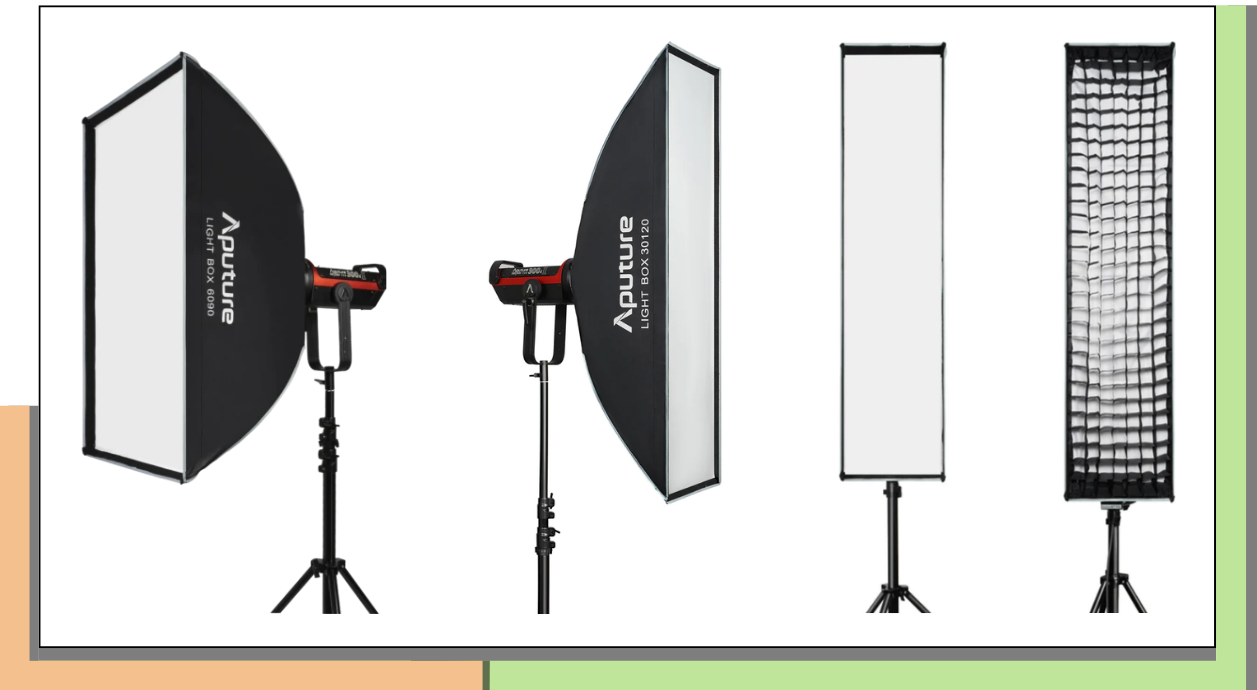
For a straightforward soft key, the
Aputure Light Box 60x90 is a useful starting point. Its rectangular shape gives you a broad, controllable source without the footprint of the larger Light Domes, whilst its 1.5- and 2.5-stop diffusion options let you trade softness against output. The included 45° grid is particularly useful when you want to keep that soft light on your subject rather than the whole room. It is therefore a good fit for interviews, portraits and smaller setups where you want a familiar softbox workflow without overcomplicating the rig.
If the shape of the source matters more, the
Light Box 30x120 takes the same basic idea in a much narrower direction. Its long, slim face is designed for cleaner linear highlights and edge lighting, whilst the grid helps keep the light contained. That makes it useful when a conventional square or rectangular softbox would spill too far – for example, creating an edge light or adding a controlled strip of illumination to a subject. It is a relatively simple modifier, but its proportions can make a significant difference to how easily you can place the light.
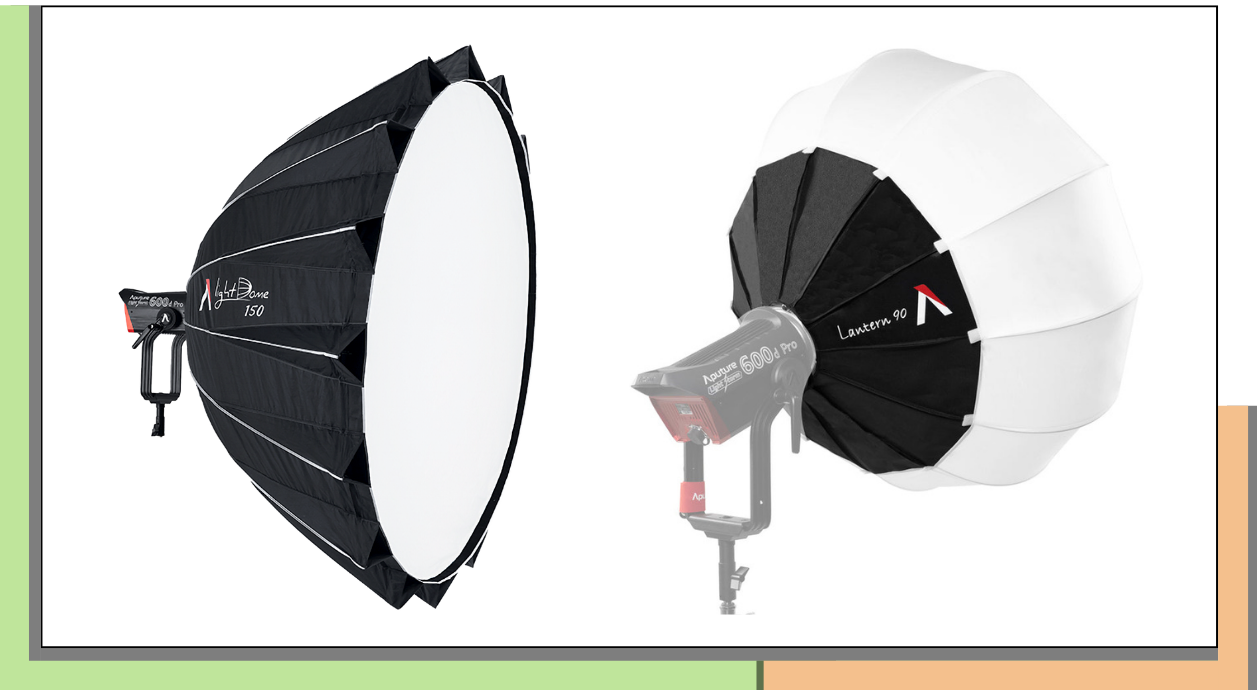
When you have the space, and enough output to make use of it, a larger LightDome becomes more about creating a substantial soft source. The
LightDome 150 uses a 150cm front surface with two diffusion strengths and a 45° grid, giving you more scope to create broad, flattering light whilst still controlling spill. Compared with a smaller softbox, the advantage is less about adding another ‘look’ and more about giving you a larger source to work with, which can be particularly useful for larger subjects, groups or when you want to bring the modifier closer to create softer fall-off.
In contrast, the
Lantern 90 approaches softness a bit differently. Rather than directing the majority of its output forwards, it produces broad, omnidirectional illumination, with a removable skirt for bringing some control back. That makes it a practical choice when you want to lift a room, create a soft ambient base or light a subject without the more obvious directionality of a conventional softbox. The trade-off is that you have less inherent control over spill, so it makes most sense when broad coverage is part of the plan. Just remember that the larger the area, the more powerful the fixture may need to be.
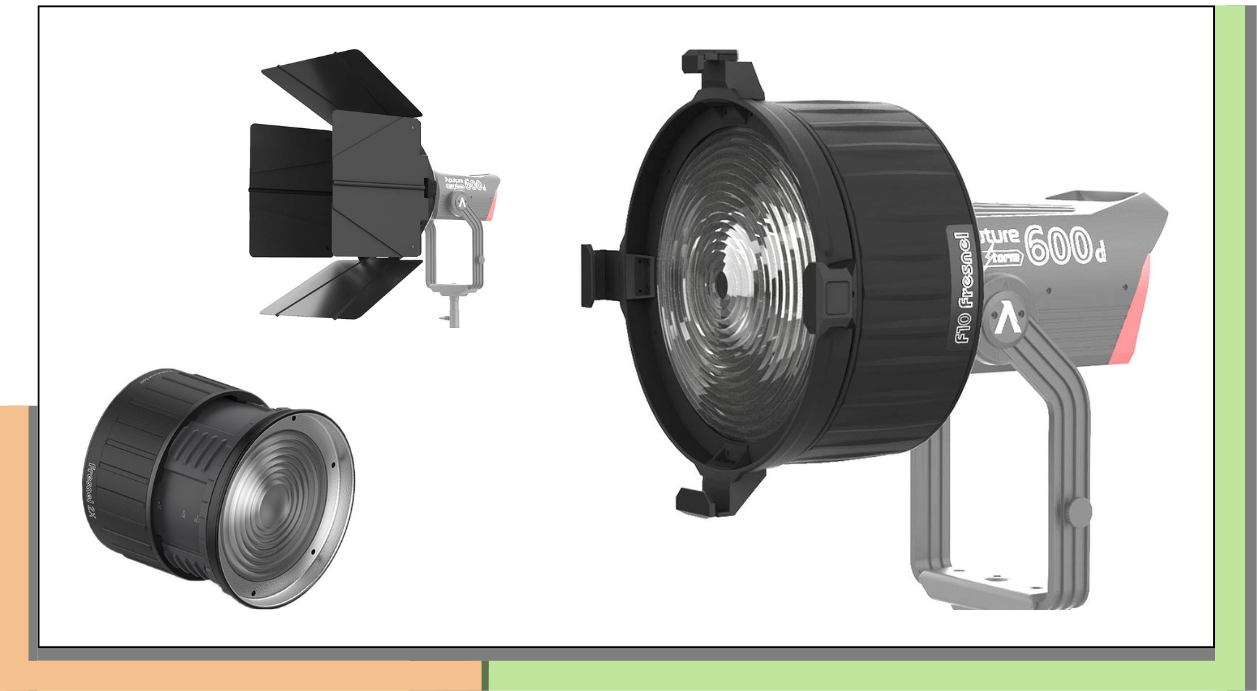
At the other end of the workflow, a Fresnel is the choice when you need to concentrate and direct a point-source LED. The
Aputure Fresnel 2X can vary its beam from 12° to 40°, letting you move between a tighter spot and wider flood without changing the modifier. This is useful when you need to push light further, pick out a particular part of the scene or create stronger direction without relying solely on distance. Adding compatible barn doors also gives you another level of control over where that beam lands.
For larger, higher-output fixtures, the
F10 Fresnel takes that approach further. Its larger lens is designed around Aputure's more powerful Light Storm fixtures, whilst its 15–45° beam range allows you to concentrate or spread the output as required. The
F10 Barn Doors can then be mounted to its accessory slot to make more deliberate cuts. This is the sort of combination that becomes valuable when you are trying to keep light off a background, simulate a strong directional source or get more usable reach from a powerful LED.
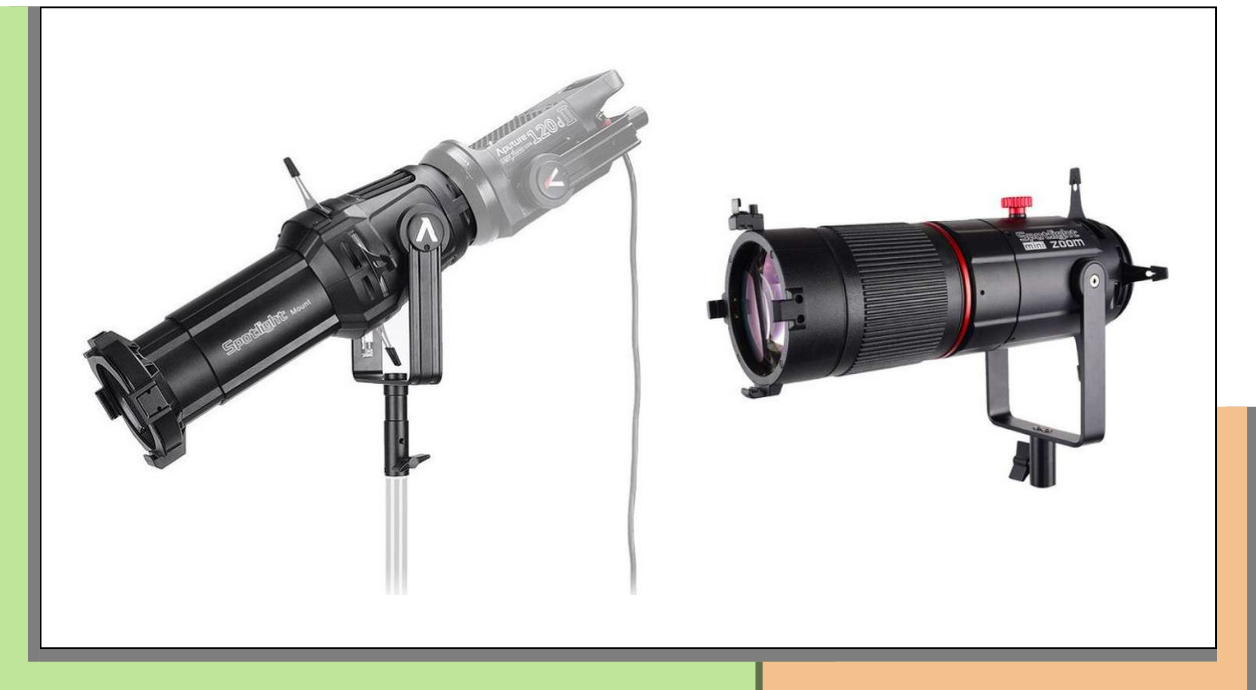
If this controlled beam isn't precise enough, though, the Spotlight options can offer a solution. The Spotlight Mount Kit and Spotlight Mini Zoom allow you to shape the light using shutters, an iris and gobos, turning the fixture into a projection tool rather than simply a harder source. The Mini Zoom is specifically designed for the LS 60d and 60x, with a 15–30° adjustable projection range and M-size gobos. That makes it good for creating defined pools, patterns and highly controlled shapes, situations where a Fresnel and barn doors might get you close, but not quite to the result you need.
So, the useful distinction isn't simply soft versus hard. It is how much control you need, how broad that control needs to be, and how quickly you need to achieve it. A Light Box or LightDome can turn a point source into a practical soft key; a Lantern can fill a space; a Fresnel can concentrate and direct output; and a Spotlight can make the light part of the composition itself. At the end of the day, the best modifier is the one that makes your lighting problem easier to solve.
Just consider the whole lighting package, not the modifier in isolation, and check compatibility with
Aputure's Compatibility Wizard. Also remember that this is only one part of the modifier picture; in a future guide, we’ll look at the accessories that don’t attach directly to fixtures but still have a major impact. Remember too, if you’re unsure which route suits your production, get in touch with us and we’ll help you build the right lighting package.